
Begin with the athlete you are today
You may know exactly what you want help with. Perhaps your attention wanders before a serve, or a mistake follows you into the next play. You may also arrive with a simpler thought: I want to understand the mental side of my sport. The starting questions give you a way to describe that without needing the right terminology.
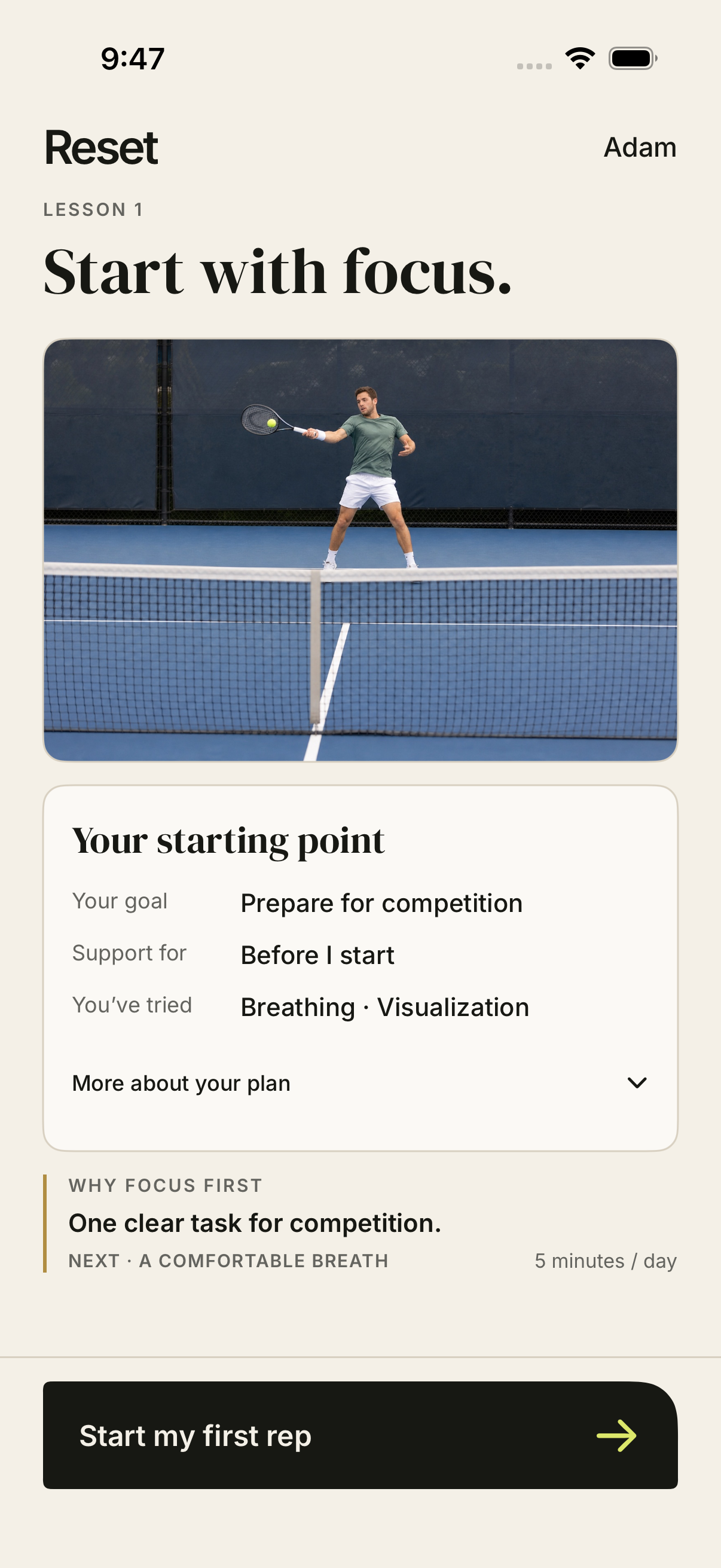
reset asks about your sport and role, goals, moments when you want support, approaches you have tried and the time you can make available. Your starting-point card brings those answers together. The example below shows a tennis athlete preparing for competition who has tried breathing and visualization. Your answers can be different.
Sport context helps make the teaching concrete. A detail worth noticing in a basketball passing drill will differ from one in a tennis return. Personalization connects a prepared skill to that setting; it is not a diagnosis or a prediction of your ability.
Understand the skill before you are asked to use it
The first lesson begins with focus. Being told to concentrate is familiar; learning what to notice is more useful. The lesson introduces the idea, explains why it matters and connects it to a detail in a sporting situation.
Recorded guidance and written instructions support the teaching. You can pause, use the sound controls and read the words. The aim is to give you something you understand well enough to try, at a pace that lets the instruction make sense.
reset draws on mental-training source materials by co-founder Dr. Braden Brown, with lessons and examples adapted for the app. His source expertise, the recorded lesson guidance and the athlete’s own practice each have a role. The voice in a lesson is recorded guidance, not a live appointment.
Give your cue a job
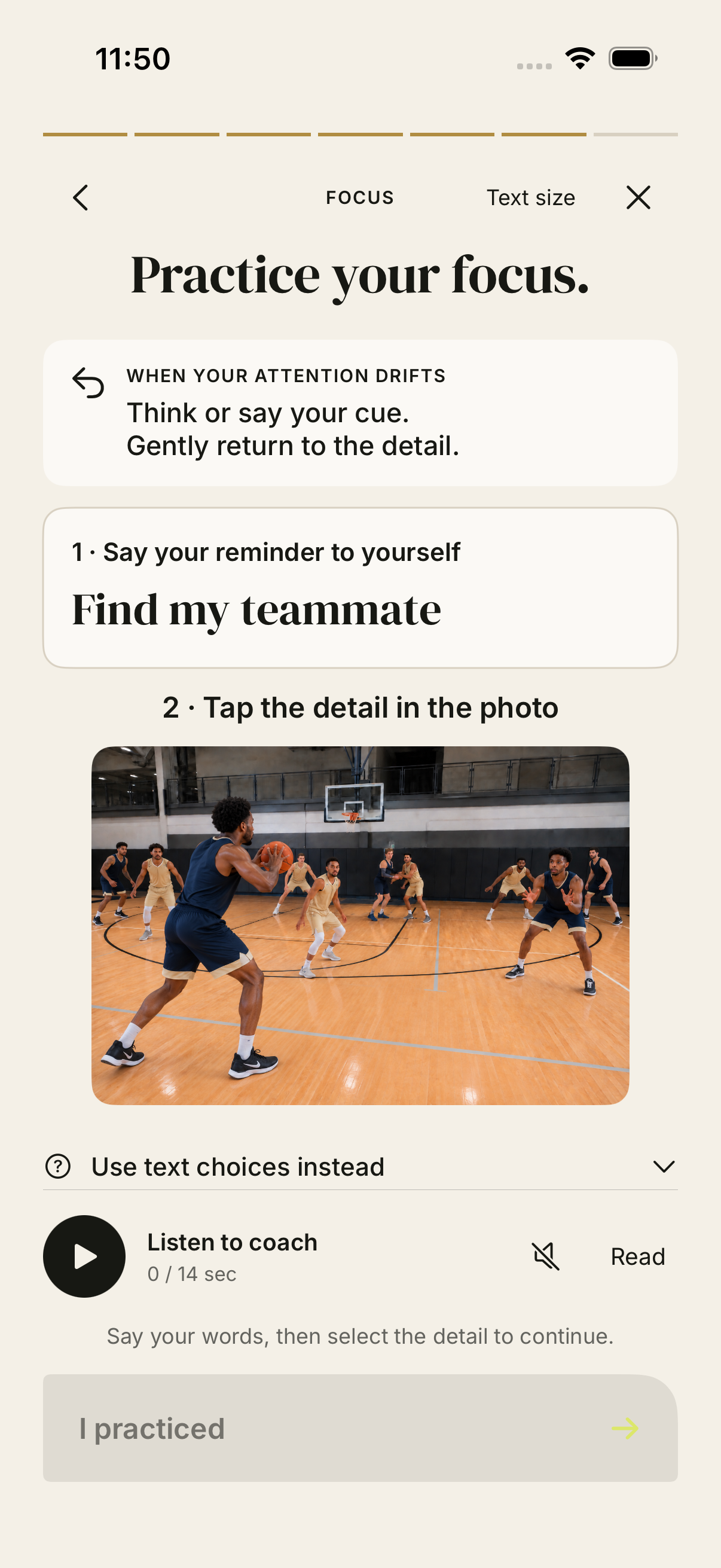
A reminder becomes useful when you know what it points to. In the basketball example below, the athlete connects a short cue with a teammate ready to receive a pass. The practice asks them to use the words and identify the relevant detail. A text-choice alternative is available for the photo task.
The lesson also makes room for attention to drift. You can notice that and return to the detail. A successful practice is not a promise that you will never be distracted again; it is an opportunity to understand the return and try it for yourself.
This is a glimpse of one exercise. As the curriculum continues, the teaching asks you to work with other mental skills and familiar moments from your sport. You do the practice rather than only collecting advice.
Decide when the lesson will meet your sport
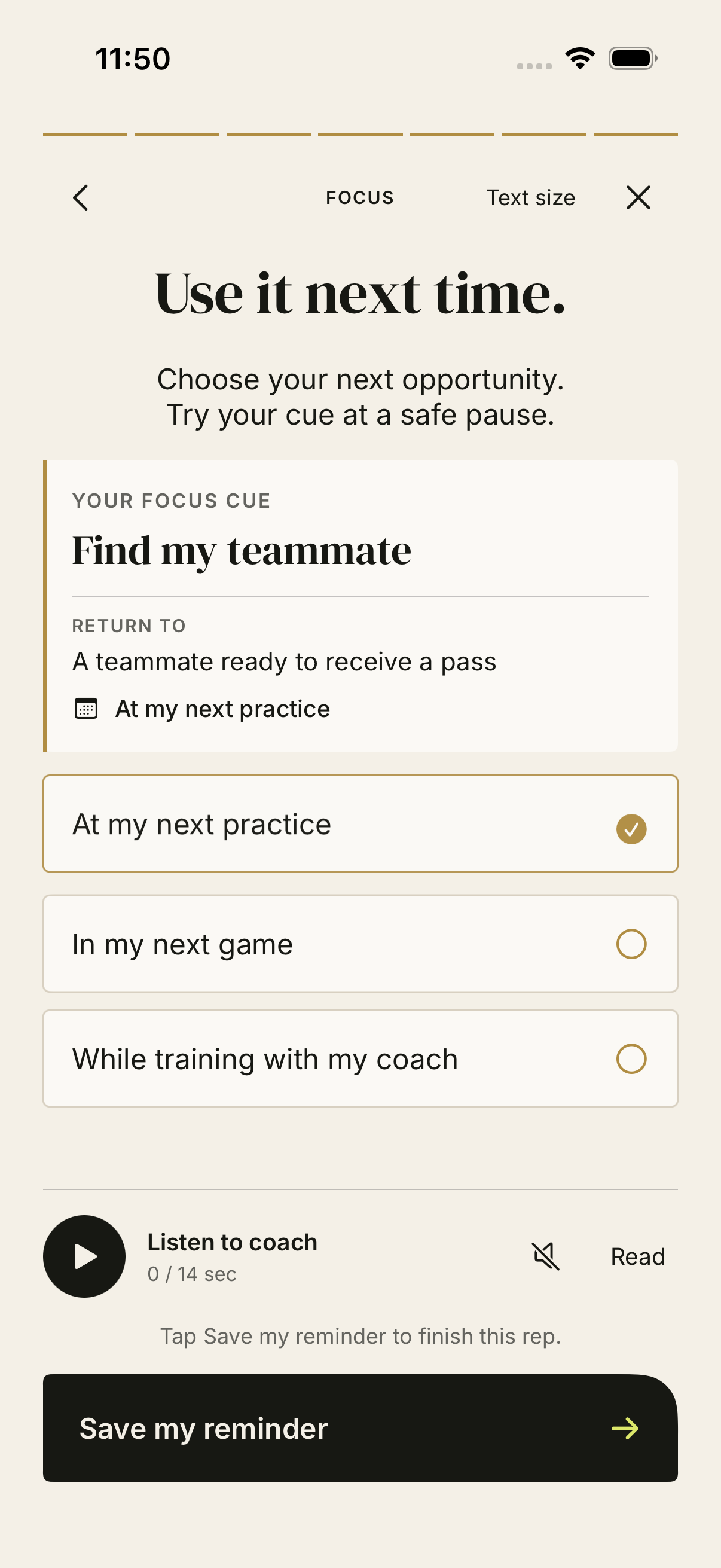
Before finishing a rep, you choose a next opportunity for the skill. Your reminder might belong at the next practice, during a suitable game pause or while training with your coach. The important connection is between the words, the detail and a moment you can recognize.
Saving a reminder records a plan. It does not mean you have already used it in a game. When you return to training, notice what happened: did the moment occur, did you remember the cue, and did it point to the right task? Those observations give you a useful starting point for reflection or a conversation with your coach.
The app lets you complete a rep and finish for the day or keep training. A manageable next step can be enough. Mental practice should find a place in your week alongside physical practice, school or work, and recovery.
Know what kind of guidance you are getting
reset currently offers expert-designed app training. It does not offer live sessions or direct messaging with a human mental performance coach. If you want an individual professional to discuss your situation and adjust their guidance through a relationship, use the coaching questions below to explore that option.
You can also bring a skill you are learning to the people already helping you. A sport coach can connect a cue to the drill you are practicing. A parent can make room for your experience without turning every game into a review. The app gives you a place to practice; those conversations still matter.
From a lesson to a question for your next practice
Suppose your starting question is, ‘What do I do when a mistake stays in my head?’ Use the lesson to understand one skill, then choose a familiar sporting moment where it could fit. Clarify the actual assignment with your coach. After practice, describe whether you recognized the moment and whether the cue made sense. That observation gives the next lesson or conversation a purpose.
The app provides educational guidance; your sporting context still matters. AI Coach is not a live appointment with a human practitioner, and a completed lesson does not establish that a health concern has been addressed. If the next question needs individual human support, use that route. If the skill is clear and appropriate, return to the practice opportunity without needing to consume the whole library at once.
Start with a useful glimpse, then join first access
You can read the public library and try the website’s short mental-skills preview before deciding whether the approach fits. The full guided curriculum is inside the app. Current app access is through the iOS beta, with athlete invitations opening in waves.
Join first access to receive the next steps when access is available. Joining the list does not itself install the app. Athletes under 18 need parent or guardian permission. Bring one ordinary sporting moment you want to work on; you do not need to wait for a crisis or a professional contract to begin learning a skill.